Some changes in the use of galvanic instruments have occurred in the past 20 years, not so much in terms of different equipment but more in the level of technology, which is significantly more advanced and sophisticated today than 25 years ago. Today, in fact, with the development of new technologies, the tools we have available for our galvanic treatments have increased.
Let’s look at some of them:
The Fischerscope X-RAY, an instrument in our laboratory, allows measurements of galvanic coatings, i.e., the thicknesses of applied treatment (copper, nickel, gold, palladium, ruthenium) to be carried out in just under 25 seconds.

Dry Corrosion Test Cabinet (DCTC) is a machine for testing and evaluating corrosion resistance with NSS, AASS and CASS tests in accordance with major international standards and norms.

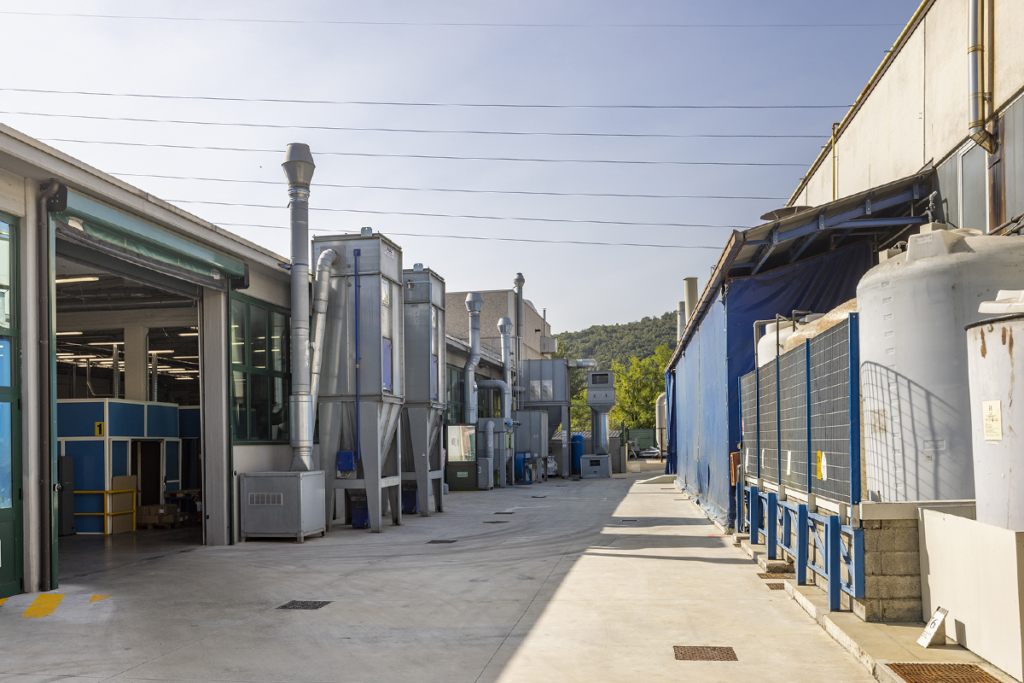
Sensitivity to the environment has also increased so much so that all of our machines are equipped with an efficient vacuum system and are isolated from the outside world, allowing, therefore, any kind of dust or agents harmful to our atmosphere to be zeroed out.
We have implemented some systems to prevent pollution and advanced abatement systems that purify atmospheric emissions and purify wastewater that are constantly monitored by computerized instrumentation.
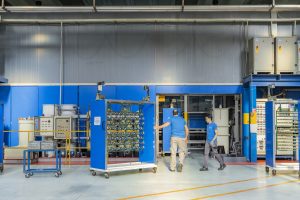
To top it all off, we built a special room in which to place the inverters that are capable of transforming the continuous energy from the 1492 photovoltaic panels, which we installed in 2020, into alternating energy for use, lending a hand in the fight against environmental pollution.

Finally, a new final washing machine that, thanks to the production of ultrapure water, allows previously galvanized products to be washed as thoroughly as possible. Thanks to the nozzles inside the pumping structure, any residue due to galvanic treatment can be removed.

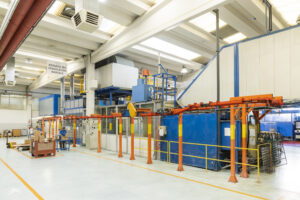
We still use electroplating baths (or galvanic baths, as we like to call them) even though they did not have PLC monitoring tools that allow us to keep track, to the millimeter, of the galvanic process at all times. Thinking about the frames as well, these were also slightly different than today’s frames.

Today they are more “customizable” and are made of different materials than today (brass, steel) although, in both cases, they were designed to have excellent resistance to the corrosive environments to which they are subjected. Monitoring instrumentation for both electroplating and painting has also changed, at the mercy of technological innovations over the past decade, instruments that allow errors to be reduced to almost zero.